Mission Statements

Our mission is to promote cultural diversity among the faculty and house staff of the Department of Medicine; to foster research in minority health and health policy; to educate physicians on the sociocultural influences affecting patient's health, beliefs and behaviors; and to expand the relationship of the Department and the larger institution with the community.

The CMMH's agenda will be carried out through four major initiatives:

  • Minority faculty and housestaff recruitment
  • Multicultural health and health policy research
  • Cross-cultural education
  • Community outreach
The CMMH also provides guidance and technical support to the Minority House Staff Committee, a resident-run group involved in minority recruitment, mentoring and community outreach. Residents will be able to participate in any and all of these initiatives during different parts of their training, and especially during the research block in their senior year.

Andrew I. Schafer, M.D.

The E. Hugh Luckey Distinguished Professor of Medicine

Interim Program Director, Internal Medicine Residency Program

Chairman, Department of Medicine

Weill Cornell Medical College

Physician-in-Chief
NewYork-Presbyterian Hospital/Weill Cornell Medical Center

Our Commitment to Diversity

Optimal care of Patients requires it
New York City is the most diverse city in the world. In addition to the old timers, and a second generation New Yorker is now a very old timer, who are a varied lot themselves, the city has been the recipient of a marvelous immigration from all over the world. Over half of us are now immigrants or the children of immigrants.

The patients at NewYork-Presbyterian Hospital are a true reflection of New York City in all its magnificent ethnic, racial, religious and socio-economic diversity. They come to us from all over the city and its surrounding areas. In fact, the plurality of our patients comes from the neighborhoods of west Queens, just across the East River from Manhattan. These neighborhoods - Long Island City, Astoria, Woodside, Sunnyside, Jackson Heights, Elmhurst, among others - are the most diverse neighborhoods in the city. Other large catchment areas include Manhattan on the east, from the Lower East Side, in the south, to Spanish Harlem to the north, and on the west side from Greenwich Village to the Upper West Side. We are also a referral center for the Greater New York area and the world.

In order to do the best for our patients, the doctors caring for them should reflect this diversity. This is especially true of our house staff who interact closely with patients on a day-to-day basis.

Judy Tung, M.D.

Associate Program Director, Internal Medicine Residency Program
Program Director, Primary Care Track

Interim Director, Weill Cornell Internal Medicine Associates
Assistant Professor of Clinical Medicine
Weill Cornell Medical College
Assistant Attending Physician
NewYork-Presbyterian Hospital/Weill Cornell Medical Center


Optimal training of Doctors requires it
Two factors are often overlooked in assessing the educational process of residency. First, in any training program, regardless of the quality of the faculty, house officers teach each other. Indeed, interns and residents spend more time with each other than with faculty, and their interactions are absolutely key to the education of physicians during residency. Second, much, if not most, of what is taught is part of the "hidden curriculum," and goes beyond learning the scientific basis of disease and its applications.

In large measure, house staff learn the different cultural values associated with medicine and ways of relating to patients from the people they live with during their training, that is, each other. They learn to be professional and standards of behavior. Given the need we have to care for patients from the wide variety of cultures, and to train doctors in this capability, a diverse house staff is a necessity.

The primary care track is particularly interested in cultural diversity and has been very successful in attracting residents from many backgrounds. Our residents take care of patients from all five boroughs, as well as persons from many different countries, cultural, and economic backgrounds. Our faculty is committed to improving expertise in taking care of patients with extraordinary diversity.

Our resident physicians experience true diversity during their training at Weill Cornell. By nature of being the most respected tertiary care hospital in New York City, NYPH draws patients from all five boroughs and many neighboring cities and states. Our patients therefore represent a diversity of cultural, ethnic and linguistic backgrounds. They also reflect a wide spectrum of socioeconomic backgrounds; it is not uncommon to care for an internet savvy executive during the same practice session as an illiterate homeless individual. Most importantly our housestaff are exposed to a diverse depth and breadth of medical illnesses. Patients with medically and psychosocially complex illnesses come to NYPH when community resources have exhausted their options. It is critical during the postgraduate years to be exposed to "zebras" or atypical manifestations of common illness. In summary, the training program at Weill Cornell is committed to offering our residents exposure to a diversity of cultures, languages, educational levels, socioeconomic strata, and a wide range of medical pathology and illness experiences.


CONTACT US

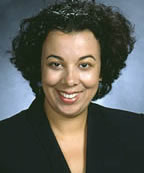
Dr. Susana Morales
Tel: (212) 746-1358
srm2001@med.cornell.edu

Dr. Carol Boutin-Foster
cboutin@med.cornell.edu

Top of page